
Choosing the Right Sketchbook for Outdoor Autumn Drawing
Autumn rewards anyone who draws outdoors: low golden light, wet pavements reflecting colour, hedgerows turning, and trees that change almost daily. It also punishes the wrong sketchbook. A book that behaves beautifully at a kitchen table can cockle, curl or shed pages on a damp bench in a gust. Choosing well comes down to three decisions, paper weight, size and binding, plus a little thought about how the season treats paper.
Why paper weight comes first
Paper weight is given in grams per square metre (gsm), and it tells you how much punishment a sheet will take. Everyday copier paper sits around 80gsm. It buckles under the faintest pencil pressure, cockles the moment moisture reaches it and lets ink feather into a fuzzy mess. For dry media outdoors, 120 to 160gsm is a sensible floor: firm enough for layered pencil, soft graphite or a fountain pen without ghosting through to the next page.
If you want to add watercolour, or even a wash of dilute ink, aim higher. Around 200gsm will cope with light washes if you work fairly dry and do not flood the page. At 300gsm you reach the comfortable standard: the sheet stays flat under a generous wash, tolerates a loaded brush and survives a clumsy thumb. The trade-off is bulk. A 300gsm A4 book is heavy in a coat pocket, so many outdoor sketchers carry a smaller 300gsm book rather than a large flimsy one. Buy the heaviest paper you will genuinely carry, not the heaviest paper in the shop.
Size and shape: be honest about where you sketch
Format affects how much kit you take, how long you stand still and how quickly you finish a study. An A6 book fits a jacket pocket and suits fifteen-minute notes on colour and shape. A5 is the outdoor workhorse, large enough for a considered drawing, small enough to hold in one hand while you work. A4 gives you room for a full composition, but you will need a bag, a board and somewhere to sit.
Orientation matters too. Landscape books suit wide views, coastlines, market squares and low horizons; portrait suits trees, doorways and standing figures. Square books are forgiving for quick studies and easy to crop later. Remember that a bound book opens as a spread, so a double page gives you an impromptu panorama without extra weight.
Binding styles and how they cope outdoors
- Spiral or wire-bound: lies flat, easy to flip and scan. The wire can bend, catch on a bag lining and bite into the page holes, so treat it gently.
- Stitched, also called section-sewn: the strongest traditional option, opens well and stays together for years. It rarely lies flat on its own, so pack two bulldog clips.
- Case-bound hardback: a rigid cover doubles as a drawing board on a bench or wall. Heavier, but brilliant in wind and drizzle.
- Glued or perfect-bound: fine for a desk, poor outdoors. The spine cracks, pages loosen and wet media will weaken the adhesive further.
- Concertina or accordion: wonderful for long panoramas and autumn colour sequences, hopeless in a breeze unless every fold is clipped down.
Match the surface to your medium
Surface matters as much as weight. Hot-pressed paper is smooth and glassy, ideal for fine ink lines, pencil detail and architectural studies. Cold-pressed, sometimes labelled NOT, has a gentle tooth that holds watercolour granulation and dry brush texture. Rough paper is more textured still, superb for loose washes and soft pencil, awkward for tiny handwriting.
Think about how your media interact. Ink behaves very differently across surfaces: on smooth paper it gives crisp, confident lines, while on rough paper it catches and skips. Cartridge paper sold for dry media will fight watercolour, cockling and pilling. If you use pencil, ink and watercolour in one book, choose a cold-pressed 200 to 300gsm watercolour paper and accept that it is slightly toothy under a fine nib. Test a corner first: a small wash and a few pen strokes will tell you more than any label.
A short outdoor kit to pair with your book
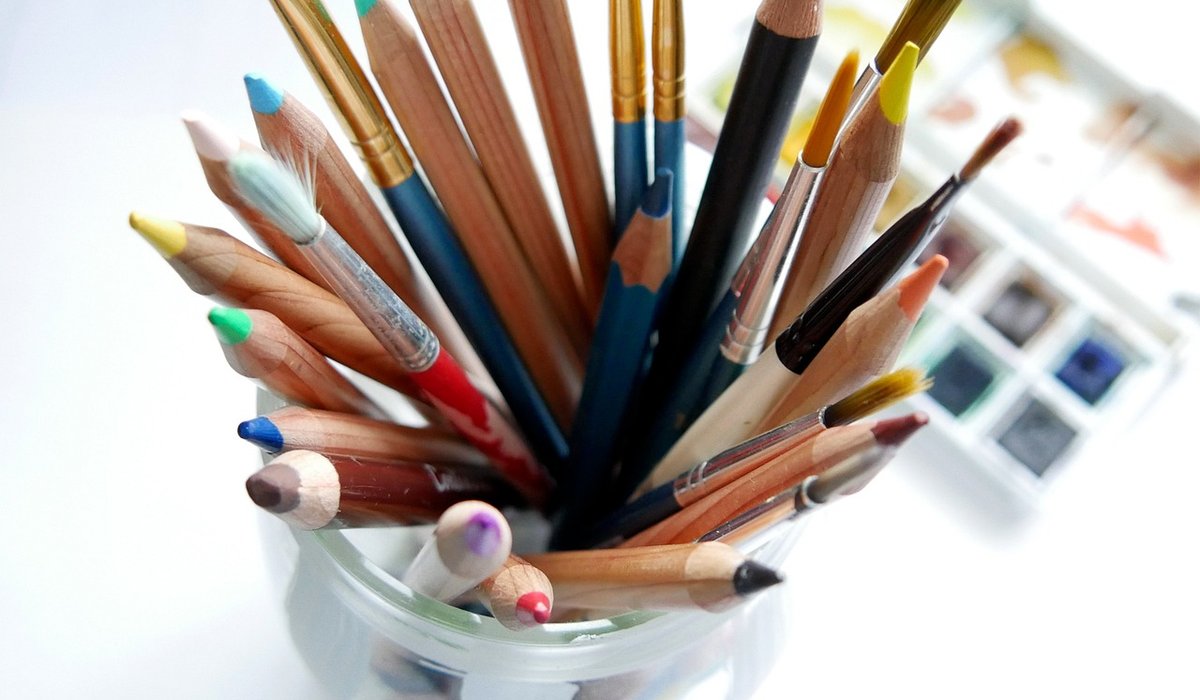
A book alone is not enough. Two bulldog clips hold pages flat in wind, a lightweight board gives you something to lean on and a waterproof cover keeps rain off your work. Add a soft pencil or two, a waterproof pigment liner, a small water brush or a collapsible pot, a tiny tin palette and a scrap of kitchen roll for blotting. A pencil case that clips to your bag saves losing things in long grass.
Checklist before you buy
- Does the weight suit your medium: 120 to 160gsm for dry work, 200gsm and up for washes?
- Will it fit the pocket, bag or board you actually use?
- Does the binding lie flat enough for the way you draw?
- Is the surface right for pencil, ink or watercolour, and have you tested it?
- Is the cover stiff enough to draw on, and does it have an elastic or closure?
- Are the pages acid-free, so autumn studies do not yellow in a drawer?
A sketchbook that suits your medium, your back and your weather will be used constantly, and the habit is what improves your drawing. Take it out on a bright, breezy October afternoon, find a bench, and let the season do the rest.


Gather fallen leaves, a plain wreath base, and a little ribbon to create a welcoming door decoration that celebrates the colours of autumn.
These simple projects use natural finds from local walks, helping you make decorations, cards, and small gifts without spending much money.
Turn a clean glass jar into a warm candle holder with tissue paper, dried leaves, and a little twine for a rustic seasonal finish.
Learn how to paint simple tree shapes, mix earthy browns and oranges, and suggest falling leaves with loose watercolour brushstrokes.