
Online Slots vs. Live Poker: Which Grind Actually Pays?
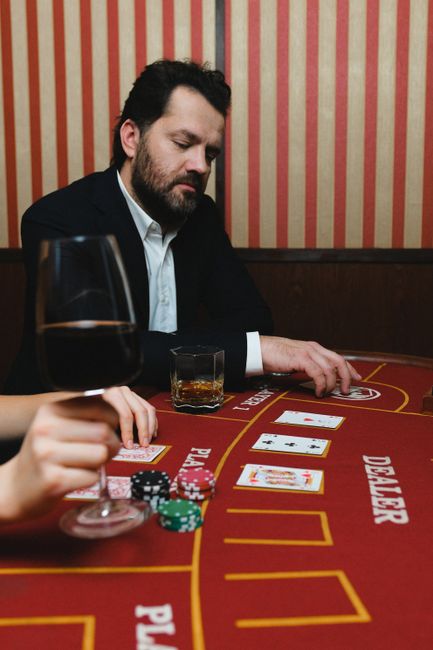
There's a moment every gambler knows. It's 2 a.m., your balance is drifting sideways, and you're staring at two very different screens: a five-reel slot spinning with cartoon fruit, and a poker table where three players just folded to a min-raise. You ask yourself the question that never gets a clean answer online: which one is actually the smarter use of my money?
I've spent the better part of a decade bouncing between both worlds — grinding micro-stakes no-limit hold'em, chasing jackpots on Megaways slots, and occasionally dabbling in live dealer blackjack when the mood strikes. The honest answer isn't "slots are rigged" or "poker is dead." It's that these two games reward completely different skill sets, bankrolls, and personalities. Let's break down what actually separates them.
The House Edge Reality Check
Numbers don't lie, and this is where slots and poker part ways fastest. A typical video slot carries a return-to-player (RTP) somewhere between 94% and 97%. That means for every $100 you cycle through, you're statistically giving the house $3 to $6. Some high-volatility titles like certain jackpot progressives drop as low as 92%, while tightened versions of popular games can sit at 94% on regulated markets. The variance is brutal, but the math is simple.
Poker is a different animal. In cash games, the casino doesn't take a cut of your losses — it takes rake from pots. At micro-stakes online, that rake can effectively cost a winning player 5 to 10 big blinds per 100 hands. A solid player at $0.50/$1 no-limit might beat the game for 3 bb/100 before rake, which means they're essentially breaking even against the rake and only profiting from weaker opponents. The upside? A genuinely skilled player can achieve a positive expected value over thousands of hands. You cannot say that about a slot machine. Ever.
- Slots: Fixed, predictable house edge. No skill. Short-term variance can be wild.
- Poker: Variable edge based on opposition and your ability. Rake is the silent killer at low stakes.
- Live dealer games: Usually land between the two — lower edge than slots, no real skill ceiling like poker.
Volatility, Bankrolls, and the Psychology of the Grind
Here's something most affiliate blogs won't tell you: slots are psychologically engineered to keep you spinning. The near-misses, the cascading reels, the bonus triggers that dangle just out of reach — it's a dopamine delivery system. If you have an addictive personality, slots are the most dangerous game in the building. Poker, by contrast, punishes impatience. Tilt is your enemy. You can play perfectly for two hours and still lose a buy-in because a 70/30 all-in didn't hold.
Bankroll management separates the survivors from the busted. For slots, the rule of thumb is simple: your session bankroll should be at least 200 to 300 times your average bet. If you're spinning at $1 per spin, you need $200 to $300 minimum just to survive normal variance. For poker, a cash game bankroll should sit at 20 to 30 buy-ins for the stake you're playing. At $1/$2, that's $4,000 to $6,000. Most recreational players ignore this and wonder why they're always reloading. See 88CLB for a side-by-side comparison.
Tournament poker adds another layer. A $10 sit-and-go has a completely different risk profile than a $10 slot session. You can run deep in a tournament and multiply your buy-in by 50, but you'll also go 15 tournaments without a cash. Slots can hit a 5,000x multiplier on a single spin — I've seen $1 spins pay over $5,000 — but that's a lottery ticket, not a strategy.
Live Dealer Tables: The Middle Ground
Live dealer games have exploded since 2020, and for good reason. Streaming blackjack, roulette, and baccarat from a real studio gives you the social feel of a casino without the travel. The house edge on live blackjack with basic strategy sits around 0.5% to 1%, which is dramatically better than any slot. But there's a catch: table limits are often higher, and the pace is slower. You might see 50 hands per hour instead of 500 spins.
Baccarat is even leaner — the banker bet carries just a 1.06% edge. Roulette, on the other hand, is a trap for the uninitiated. European single-zero wheels have a 2.7% edge; American double-zero wheels double that to 5.26%. Always, always check which wheel you're playing. That single green zero makes a massive difference over a session. If this is new to you, 88CLB COM is a sensible next read.
Where the Real Money Is Made (and Lost)
Let's talk actual profit potential. Slot streamers on YouTube will show you $50,000 wins, but what they don't show is the $80,000 they fed into the machine beforehand. The math is unforgiving: without a massive multiplier hit, you cannot beat a slot machine long-term. The best you can do is manage your time, set strict loss limits, and treat it as entertainment spending.
Poker is the only game in the casino where a disciplined player can genuinely profit. But "genuinely profit" comes with asterisks. You need to study ranges, understand pot odds, exploit weaker players, and avoid tilt. The modern game is tougher than it was in 2008. Solvers and training sites have raised the floor for everyone. If you're not actively studying, you're the fish.
My personal rule: slots are for fun money. Poker is for the competitive itch. Never mix the two bankrolls. If you're on a bad poker run, don't go chase it back on a slot — that's how you turn a $200 downswing into a $2,000 disaster.
Final Thoughts: Pick Your Poison Wisely
Neither slots nor poker is inherently "better." They scratch different itches. Slots are instant, passive, and volatile — a rollercoaster you ride for the thrill. Poker is slow, cerebral, and rewarding if you put in the work. Live dealer games offer a social middle ground with respectable odds. The smartest gamblers I know treat all three as separate budgets, set hard stop-losses, and never chase losses across games.
If you want my blunt advice: learn basic strategy for blackjack, study preflop ranges for poker, and treat slots like a night at the movies — you're paying for the experience, not the payout. Do that, and you'll outlast 90% of the people spinning next to you.


Turn a clean glass jar into a warm candle holder with tissue paper, dried leaves, and a little twine for a rustic seasonal finish.
Learn how to paint simple tree shapes, mix earthy browns and oranges, and suggest falling leaves with loose watercolour brushstrokes.
Discover how to combine reds, yellows, and browns to create rich autumn hues for landscapes, leaves, and seasonal sketchbook studies.
Use wet-on-wet washes, soft edges, and restrained colour to capture the quiet atmosphere of misty autumn mornings in your paintings.